Plaque begins reforming soon after a cleaning, while tartar, stains, and trapped debris can accumulate faster around crowded teeth, braces, bridges, or dry mouths. By the end, you will know which deposits you can control at home, which require instruments, and when recurring buildup calls for a different cleaning plan or gum assessment.
Key takeaways
- Brush the gumline twice daily and clean between every tooth.
- Choose floss, interdental brushes, or a water flosser for your tooth shape.
- Limit frequent sugar and starch exposure to slow plaque hardening.
- Ask about scaling, periodontal care, or shorter recalls when deposits return quickly.
Why buildup returns after a professional cleaning
Plaque begins reforming within hours after a professional dental cleaning because it is a living bacterial biofilm, not a one-time coating. Bacteria use sugars and starches left in the mouth, while saliva supplies minerals that gradually harden undisturbed plaque into calculus, or tartar.
Food debris, tobacco residue, tea and coffee stains, dry mouth, crowded teeth, braces, and deep gumline contours make certain areas collect buildup faster.
| Deposit | Can you remove it yourself? | What happens between visits |
|---|---|---|
| Plaque biofilm | Yes, with brushing and interdental cleaning | It returns daily, especially along the gumline and behind lower front teeth |
| Food debris | Yes, with brushing, floss, or an interdental tool | It can remain around braces, bridges, crowns, and tight contacts |
| Fresh surface stain | Sometimes, partly | Brushing can reduce loose residue, but tobacco, tea, and coffee stains can persist |
| Calculus or tartar | No, not reliably | Hardened deposits need professional instruments during a professional dental cleaning |
Brush twice daily for about two minutes with fluoride toothpaste containing roughly 1,350–1,500 parts per million fluoride, then spit rather than rinsing with a large amount of water. You can disrupt plaque and remove trapped food at home; you cannot safely scrape off tartar.
A visit arranged through general dentistry in Thane or elsewhere must distinguish routine cleaning and stain removal from periodontal treatment when deposits extend below the gumline.
A daily routine for the gumline and difficult surfaces
Brush twice a day for two minutes with fluoride toothpaste containing about 1,350–1,500 parts per million fluoride. Aim the bristles toward the gumline at roughly 45 degrees, using small, gentle movements rather than hard sawing; force can injure gums while leaving plaque behind.
Use this sequence so difficult areas do not become an afterthought:
- Brush the outer, inner, and chewing surfaces of every tooth.
- Spend extra time behind the lower front teeth and around the last molars.
- Angle the brush around crowns, fillings, and the gumline.
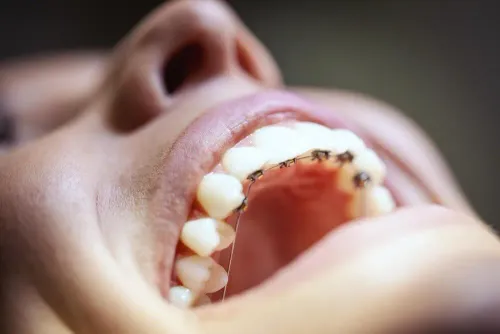
- Clean around brackets and wires from above and below if you wear braces.
- Spit out the toothpaste after brushing; do not immediately rinse with a large amount of water.
- Replace the brush or electric-brush head when bristles splay or lose their shape.
Clean between your teeth once daily, preferably before brushing. Slide floss gently against each tooth in a C shape and move it below the gum edge without snapping. For wider spaces, bridges, or braces, use an appropriately sized interdental brush; forcing one through a tight contact can damage the gum.
A water flosser can help flush around orthodontic appliances or bridges, but it does not remove hardened calculus. Plaque left at the gumline can mineralise before your next teeth cleaning in Thane, so persistent bleeding, swelling, bad taste, or recurring deposits calls for a technique review rather than harder brushing.
Choosing interdental tools for teeth, braces, bridges, and implants
Tight contacts need floss; open spaces need an interdental brush. The correct aid slides through without force, snapping, or cutting the gum.
| Option | Best fit | Use it this way |
|---|---|---|
| Floss or floss holder | Tight contacts between natural teeth | Curve it around each tooth and move below the gumline; do not saw forcefully. |
| Interdental brush | Open gaps, gum recession, or lost periodontal attachment | Choose the largest size that passes comfortably without bending the wire or injuring tissue. |
| Orthodontic brush or floss threader | Brackets, wires, and fixed retainers | Clean above and below the archwire, then thread floss beneath a fixed retainer. |
| Threader, Super Floss, or narrow interdental brush | Under a bridge or around a crown | Pass the stiff end under the pontic and clean both supporting teeth. |
| Implant-specific soft brush or interdental brush | Around implant crowns and healing components | Use a size and material recommended for the implant restoration; bleeding, swelling, bad taste, or pus needs assessment. |
| Handled floss holder or water flosser | Limited hand mobility | Use a large-grip handle or water flosser to reach between teeth and around appliances; confirm technique with a dental professional. |
A water flosser helps flush debris around braces and bridges, but it does not remove hardened calculus. Do not force an oversized brush into a closed contact. A professional can measure the spaces and demonstrate the right angle during general dentistry for teeth cleaning in Thane, whether you need preventive cleaning or periodontal care.
How diet, saliva, and tobacco change your buildup risk
Frequent sugary drinks, sweets, and refined snacks keep plaque-forming bacteria supplied between meals. Sipping sweetened tea or coffee all day and eating sticky foods such as dried fruit prolong acid exposure and leave debris at the gumline. A professional dental cleaning removes existing calculus and plaque; it does not stop biofilm from reforming.
| Factor | How it raises buildup risk | Practical change |
|---|---|---|
| Frequent sugar or starch | Feeds plaque bacteria and increases acid attacks | Keep sweet foods with meals; choose water between meals |
| Low saliva flow | Reduces natural rinsing and buffering | Sip water regularly; chew sugar-free gum after meals |
| Tobacco use | Promotes gum disease and stains; smoking can hide bleeding | Stop tobacco and do not judge gum health by bleeding alone |
Saliva flow can fall because of antihistamines, antidepressants, decongestants, some blood-pressure medicines, dehydration, mouth breathing, or conditions such as Sjögren syndrome. Ask your doctor or dentist to review persistent dry mouth rather than relying on frequent sweets or acidic drinks for relief.
Tobacco residue combines with plaque, while smoking-related reduced bleeding can make unhealthy gums look deceptively quiet. Quitting lowers the ongoing risk; arrange a gum assessment if deposits return quickly, breath smells persistently, or gums recede.
Make these changes daily:
- Drink water with meals and between them.
- Brush twice daily with fluoride toothpaste and clean between teeth once daily.
- Use alcohol-free dry-mouth products when recommended.
- Tell your dentist about diabetes, medicines, braces, or crowded areas that trap food.
When recurring deposits need scaling, periodontal care, or a revised recall plan
Book a professional assessment instead of simply polishing more often when deposits return quickly, bleeding persists, gums swell, breath changes, or teeth feel loose. Bleeding during brushing usually reflects inflamed gums, so keep cleaning gently rather than stopping; spontaneous or persistent bleeding needs evaluation for periodontal disease or another cause.
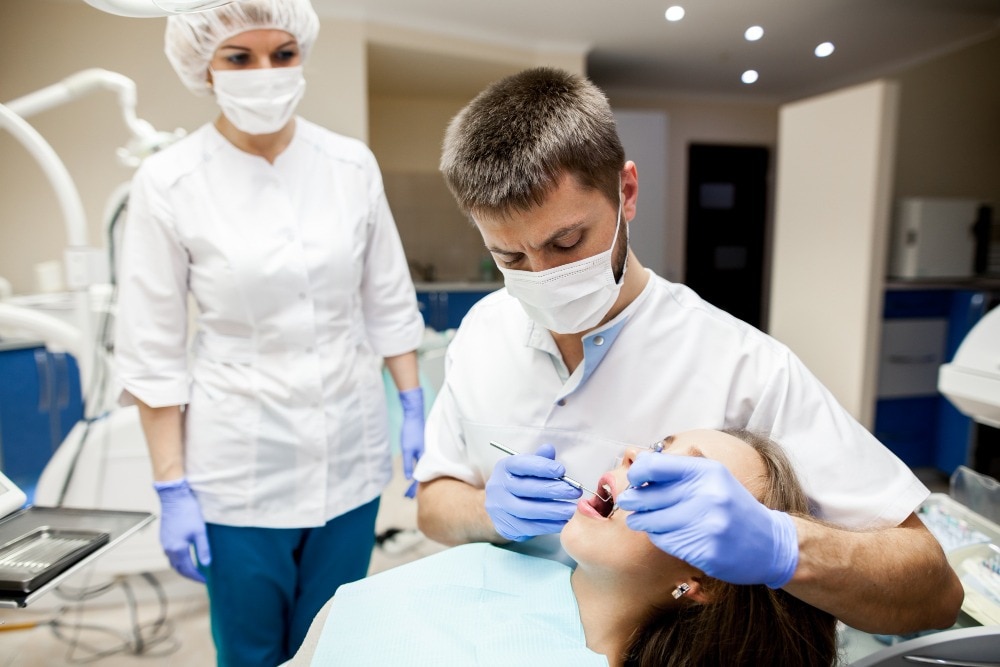
A routine teeth cleaning in Thane suits visible calculus and surface stains above the gumline. Deposits below the gumline, periodontal pockets, bone loss, or active periodontitis call for periodontal charting and possibly subgingival scaling and root planing over more than one visit. Scaling and polishing in Thane is not a substitute for that treatment.
During a local general dentistry in Thane visit, discuss:
- Whether the deposits are calculus above the gumline, deposits below it, stain, or food retention.
- Gum measurements at each tooth, including pocket depths, bleeding sites, recession, and mobility.
- Whether dental X-rays are needed to check bone levels, decay, or hidden deposits.
- Your smoking, diabetes, dry-mouth symptoms, medicines, braces, crowns, bridges, or implants.
- A recall interval based on your findings, plaque control, calculus formation, and periodontal history—not an automatic six-month appointment.
- What improvement to expect after treatment; exposed spaces or a different bite sensation can follow tartar removal, but genuine looseness requires review.
Dentistic Dental Clinic - 8104224702 can help separate a preventive cleaning decision from a periodontal-care assessment during a general dentistry appointment.
Related service
Cleaning and Polishing Treatment Cleaning and Polishing Treatment ₹1200 Cleaning and polishing treatment is a preventive dental procedure designed to maintain healthy teeth and gums. View service → |
Frequently asked questions
Why does dental buildup return after professional cleaning?
Plaque begins reforming within hours because bacteria create a living biofilm. Saliva minerals can harden undisturbed plaque into calculus, or tartar.
How should you clean the gumline and difficult surfaces daily?
Brush along the gumline twice daily and clean between teeth every day, giving extra attention to crowded, tilted, or hard-to-reach surfaces.
Which interdental tool is right for teeth, braces, bridges, and implants?
Use the tool that fits the space without forcing it: floss for tight contacts, interdental brushes for open spaces and braces, and specialised floss or a water flosser around bridges and implants.
When do recurring deposits need scaling or periodontal care?
Arrange an assessment when deposits return quickly, gums bleed or swell, bad breath persists, or cleaning does not control the problem. A dentist may recommend scaling, periodontal treatment, or a revised recall interval.
Keywords